
VENUE
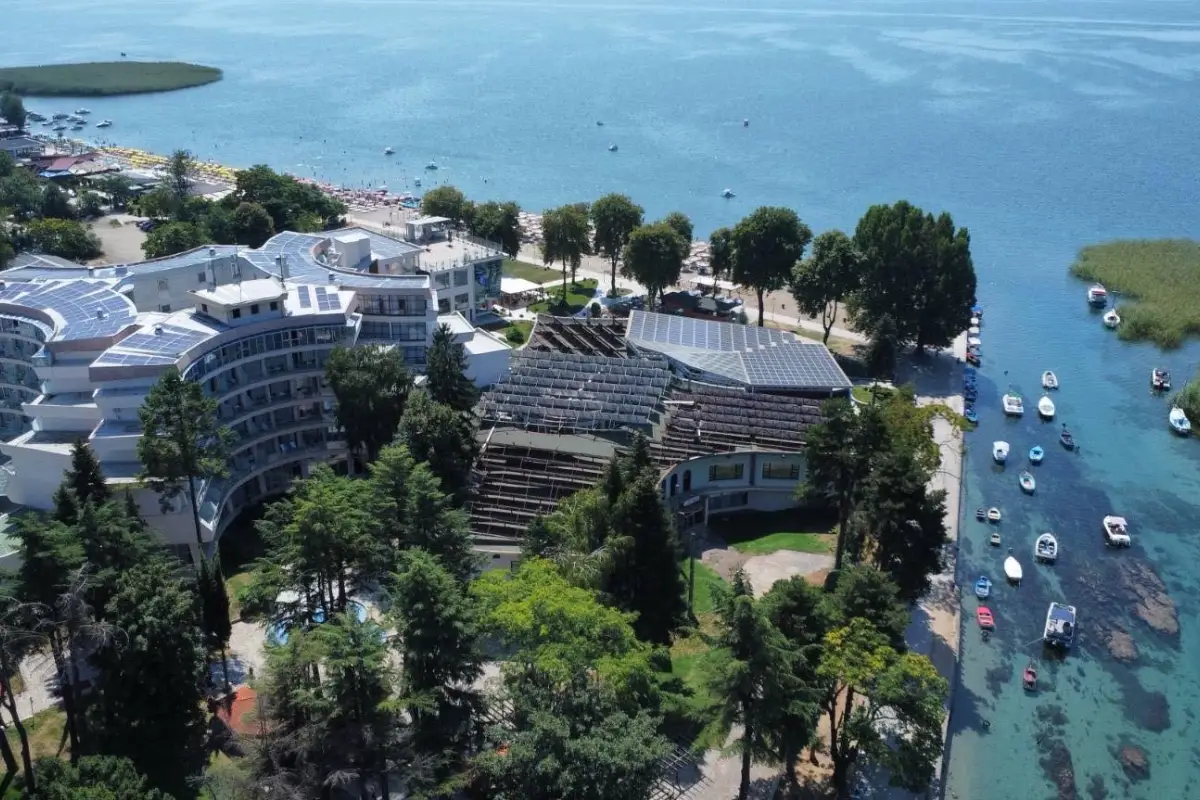
The conference will be organized by the beautiful Ohrid Lake, in the cradle of the Slavic literacy.
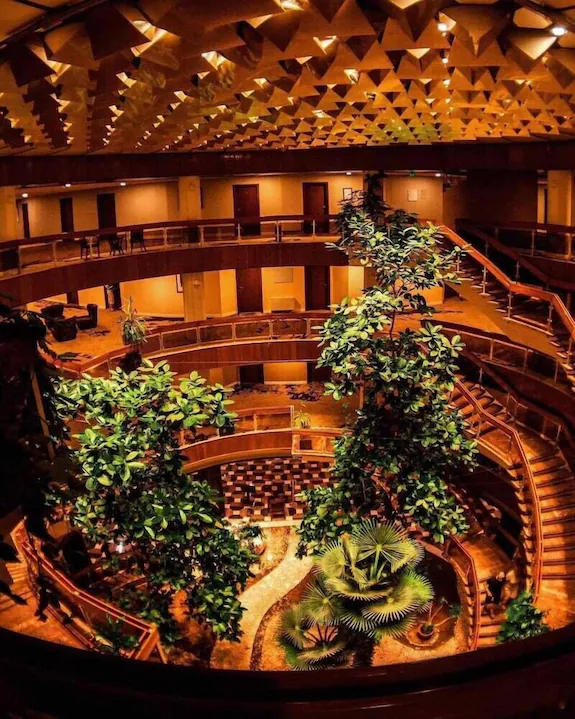
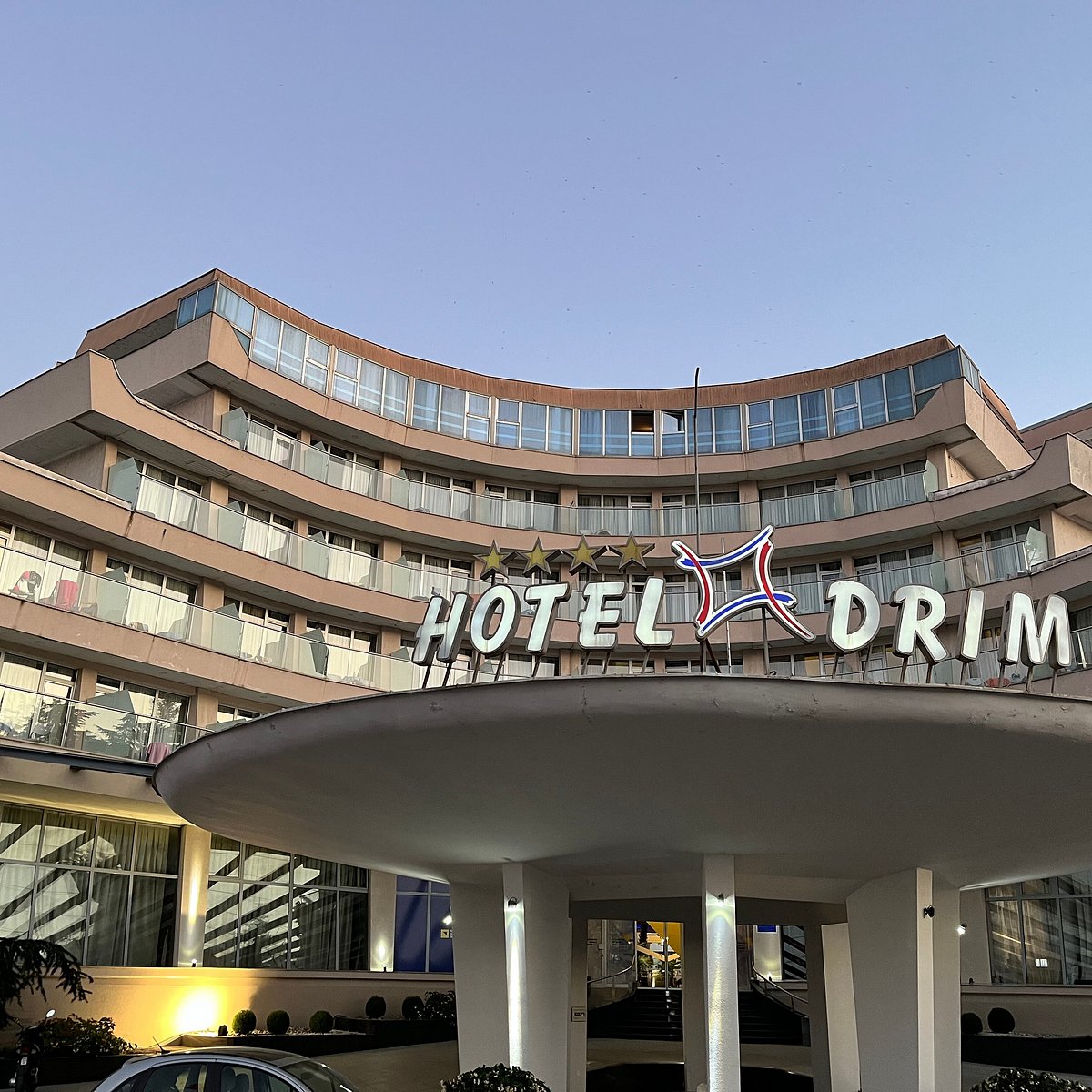
The conference venue is hotel complex HOTEL DRIM STRUGA.
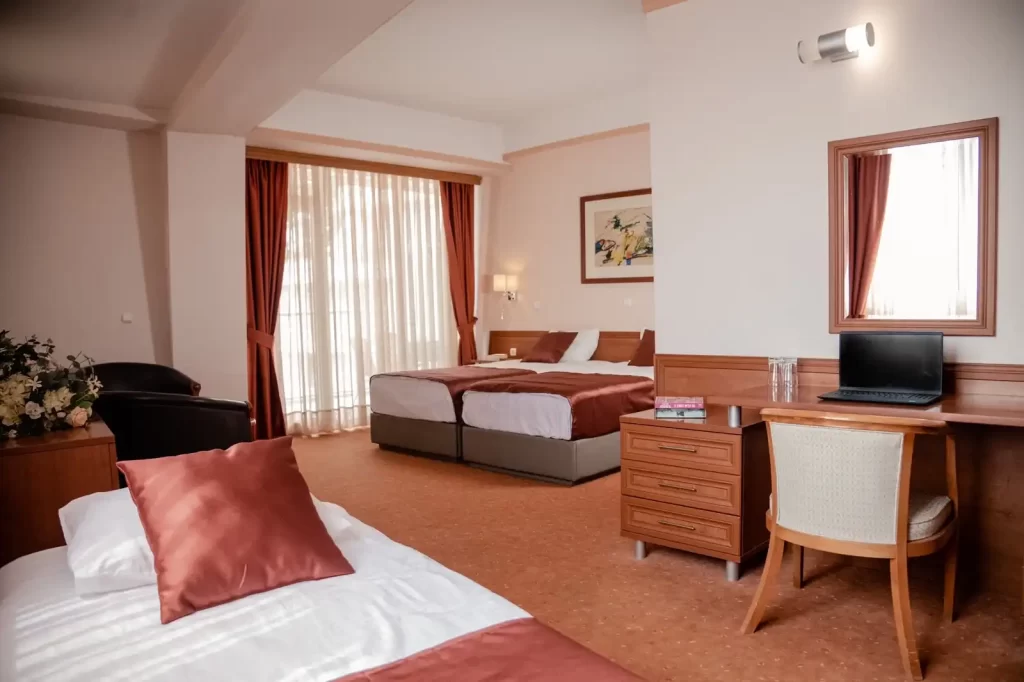
Reservations can me made directly to the hotel with note for the ICT Innovations Conference.
ACCOMMODATION
Welcome to the ICT conference at the hotel complex HOTEL DRIM STRUGA!
We are excited to have you join us and hope that your stay with us is enjoyable and productive.
Reservations can me made directly to the hotel with note for the ICT Innovations Conference.
travel info
Ohrid St.Paul The Apostle Airport
Ohrid St.Paul The Apostle airport in North Macedonia offers flights to destinations such as Dortmund, Vienna, Zurich and Mulhouse. You can find more information on the destinations and flight schedules on the airport’s website on the following link: https://ohd.airports.com.mk, as well as the website of the airlines that operate flights to and from this airport. Please note that flights schedules and destinations are subject to change, so it’s best to check directly with the airport or airlines for the most up-to-date information.
Skopje Airport
Skopje airport has daily direct flights to and from Vienna, Zurich, Istanbul, Zagreb and Belgrade. Daily one-hop connections are available to all major towns in Europe. As well several direct airlines connections exist 1 to 2 times a week to, Brussels, Rome, Düsseldorf, including low cost (Wizz Air) connections to Barcelona, Basel, Brussels, Cologne, Dortmund, Dusseldorf, Eindhoven, Frankfurt Hahn, Friedershafen, Geneva, Gothenburg, Istanbul, London, Malmo, Milan, Munich, Nuremberg, Oslo, Paris, Rome, Split, Stockholm, Treviso, Wien, Zurich. Updated list of current destinations and timetable can be found on the following link: http://skp.airports.com.mk/
Thessaloniki Airport in Greece
It is possible to get from Thessaloniki to Skopje, by bus or train, bus being recommended as it is much faster (3,5-4 hours in contrast to train that takes 7 hours).
Citizens of the following countries are not required to have entry visa for the Republic of North Macedonia
EU member countries and signatories of the Schengen Agreement have the right to enter the Republic of North Macedonia with a valid ID card.
Third countries with permanent stay in an EU member country or signatory country of the Schengen Agreement may stay in the Republic of North Macedonia for up to 15 (fifteen) days upon every entry to the territory of the Republic of Macedonia, and the total amount of the subsequent stays in the Republic of North Macedonia must not be longer than 3 (three) months within a six-months period, starting from the date of the first entry.
Third countries with multiple entry short stay Schengen visa type C valid at least 5 (five) days beyond the intended stay in the Republic of North Macedonia may stay in the Republic of North Macedonia for up to 15 (fifteen) days upon every entry to the territory of the Republic of North Macedonia, and the total amount of the subsequent stays in the Republic of North Macedonia must not be longer than 3 (three) months within a six-months period, starting from the date of the first entry.
Short-Stay Visa for the Republic of North Macedonia
Document needed for short-stay visa, up to 90 days (type C), i.e. transit visa (type B)
Acknowledged travel document that is valid for at least 3 months beyond the intended stay of the foreigner in the Republic of North Macedonia
documents for (individual or collective) travel insurance (policy issued by a legal insurance entity at the country of residence)
notarized warranty letter i.e., invitation by a Macedonian physical/legal person proof of possession of sufficient resources for the duration of the stay in Republic of North Macedonia (credit card/ bank statement)
photography (sized 3,5 x 4,5 cm) in colour on a white background where the face of the applicant is clearly visible
proof of paid fees for processing the visa application neatly and legibly filled out visa application
about the city
Skopje is the capital of the Republic of North Macedonia, the City that lies in the heart of the Balkan Peninsula, at the crossroad of important communications, a city with a 2000 years old tradition. Skopje is a modern city with population of almost one million and presents Macedonia’s major political, economical, educational and cultural center. It continues to be a focus for new residents, economic development, construction and refurbishment. Skopje urban area extends across the Skopje valley for approximately 30 kilometers (18.75 mi) in width and comprises 10 municipalities.
Skopje also is a very attractive tourist destination with its fortress, cultural and historical monuments, archaeological sites, sport halls, caves in the canyon of the River Treska and Lake Matka and a health spa in the eastern part of the city.
Skopje is steadily becoming a vital regional route for international flight operators. The town with the beautiful quay of the Macedonian river “Vardar”, the narrow streets in the Old Bazaar which is the biggest bazaar preserved in the Balkans today, the town is internationally famous for being the birthplace of Mother Teresa. He has blossomed into a thriving, stimulating city to explore, defining itself as an exciting tourist destination with the 1500 years old fortress Kale and monastery St. Pantelejmon with the fresco ”Lamentation of Christ”, with the first signs of the Renaissance, the Islamic monuments Sultan Murat’s- Hjunkar Mosque, the Daut Pasha’s bath.
More information about Skopje can be found at:
Struga sits about 14 km from Ohrid, on the plain of the Struga Field, wrapped by mountains—Jablanica to the west, Karaorman to the northeast, Galicica to the southeast. The geography and proximity to the lake give Struga a gentle climate and a theatre of winds, from cool northerlies that drift along the Drim to the mountain strmec that whispers down at night. In summer, the water warms nicely, and the riverfront becomes the city’s open-air living room.
Lake Ohrid is one of Europe’s deepest and oldest lakes, with a unique aquatic ecosystem of worldwide importance, with more than 200 endemic species.The transition from compressional to extensional tectonics in the central Balkan Mts occurred around 6 million years ago, with the oldest lake sediments being Pliocene, possibly 3-5 million years old.
In 2010, NASA named one of Titan’s lakes after it. In 2014, the Ohrid-Prespa Transboundary Reserve between Albania and North Macedonia was added to UNESCO’s World Network of Biosphere Reserves.
More information about Struga can be found at: